
by Richard E. | Nov 15, 2023 | Primordial nonlinearity, Self Gravitating Quantum Matter
Overdensities in the post-inflationary universe can grow via gravitational collapse. In simple models this happens long after inflation because the perturbations are initially small. However, parametric resonance after inflation can dramatically boost the amplitude of...

by Richard E. | Aug 20, 2023 | Dark matter and dark energy, Self Gravitating Quantum Matter
Ultralight – or fuzzy – dark matter hypothesises that dark matter consists of an extraordinarily light fundamental particle with a rest mass at least a trillion, trillion times less than that of an electron. A particle this light can exhibit wavelike behaviour over...
by Richard E. | Aug 1, 2023 | Writing and Videos
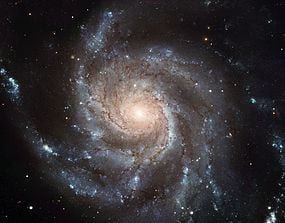
For astronomers, looking at the sky can be like watching an unfamiliar sport on TV. We can’t make sense of what we see but is that because we don’t know the rules or we can’t see all the players? (Or, worst case, we can’t see the players and we...

by Richard E. | Jun 23, 2023 | Black Holes and Gravitational Waves, Feature
It has been claimed that black holes naturally grow more massive as the universe expands. We take this surprising proposal at face value and compute its implications for the merger rates of the black hole binaries formed when pairs of massive stars collapse. Bigger...

by Richard E. | Jun 19, 2023 | Dark matter and dark energy
MOND provides an alternative explanation to dark matter for the dynamics of spiral galaxies. We take spiral galaxies from MONDian simulations and construct the dark matter halos needed to explain the stellar accelerations in the disk. We then look at the differences...
